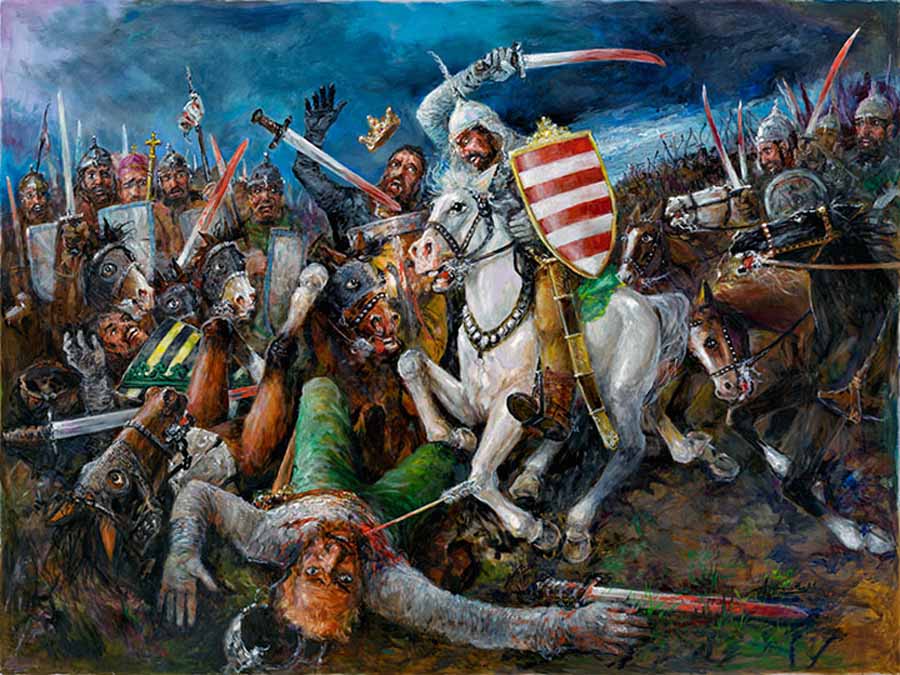
• Maneuverability and brilliant tactics won against overwhelming numbers. The European forces at left-heavy cavalry and armor-are ponderous and weary from looting and their long march. Arpad's light cavalry and fast-striking operations corner them against the Danube and shower them with flights of arrows. The reverse of the canvas includes the family crest and the phrase "Magyarok Fenyes Gyozelme - Brilliant Hungarian Victory." This painting is part of the Hungarian millecentennial historical suite in the Museum of Hungarian Military History in Budapest.

    September 19, 2025

    The European forces at left-heavy cavalry and armor-are ponderous and weary from looting and their long march.
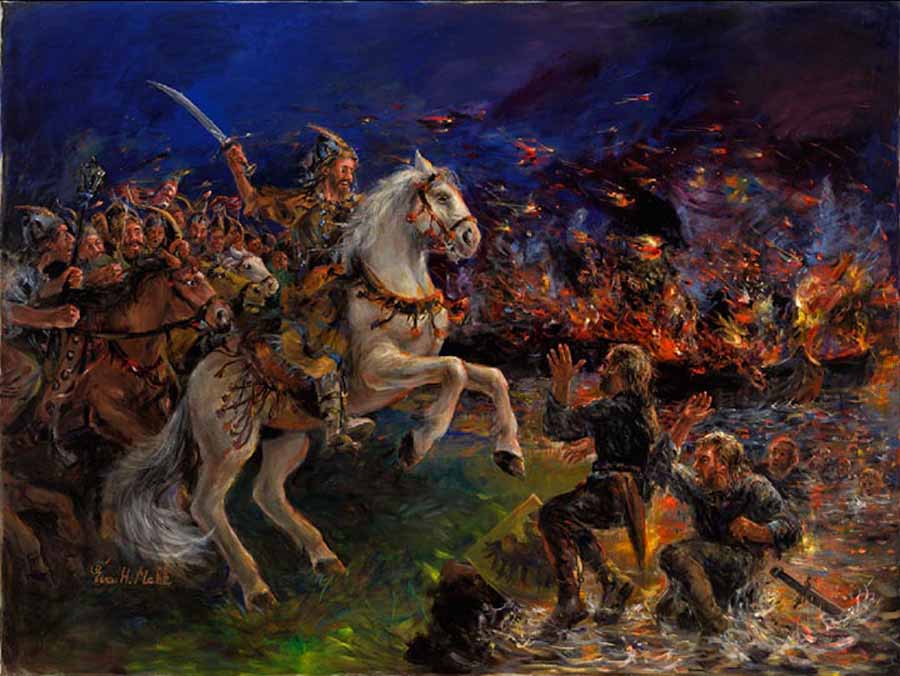
  • At the battle of Pozsonyi (Pressburg) on the Danube in summer 907 C.E, about 30,000 Hungarian irregulars, mostly farmers called from tending their fields, defeated an invading army of more than 100,000 German, French, and Italian professional soldiers. On this evening of the second day of battle, the Hungarians cut the invaders' supply lines by holing their boats, setting them on fire - flaming arrows arch through the sky - and then rounding up everyone who swam to shore. Survivors were eventually repatriated. This painting is part of the Hungarian millecentennial historical suite in the Museum of Hungarian Military History in Budapest.

    September 19, 2025

    At the battle of Pozsonyi (Pressburg) on the Danube in summer 907 C.E, about 30,000 Hungarian irregulars, mostly farmers called from tending their fields, defeated an invading army of more than 100,000 German, French, and Italian professional soldiers.
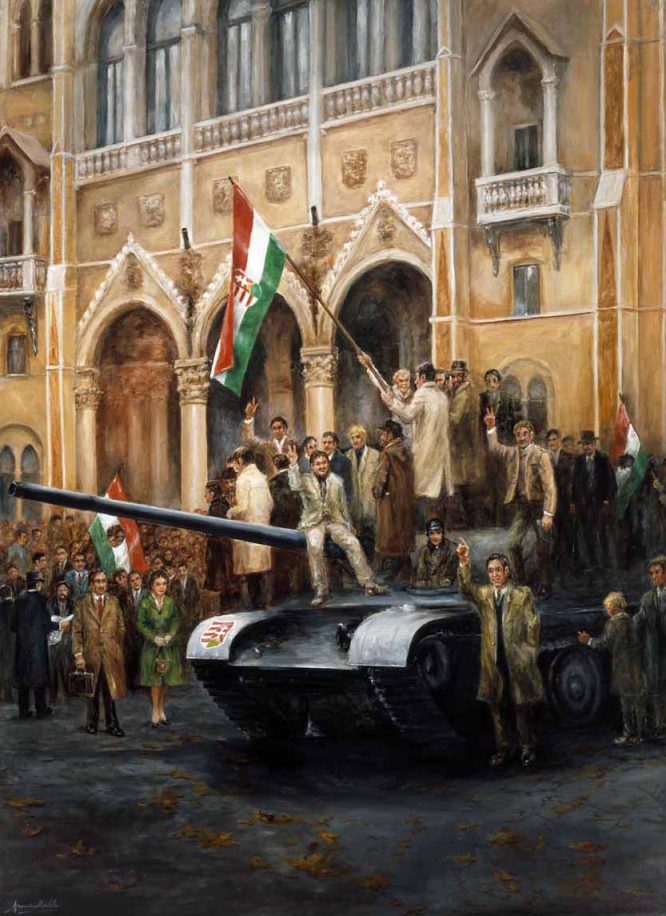
  • Inspired by a photo of the first moments of the 1956 revolution, the painting depicts a jubilant, unorganized crowd of Hungarian civilians shortly after they seized a Soviet tank outside of the Hungarian Parliament in Pest. The Soviet symbol has been cut from the flag, and the Hungarian emblem has been painted on the tank. Despite the nonviolent beginnings, the Hungarian and Soviet secret police began shooting civilians. Hungarian young people armed themselves by breaking open Soviet armories, and forced the Soviets to retreat for a week, while Hungary waited for world validation. When the Free World did not support free Hungarians, the Soviets counterattacked. This painting is part of the Hungarian millecentennial historical suite in the Museum of Hungarian Military History in Budapest.

    September 19, 2025

    Inspired by a photo of the first moments of the 1956 revolution, the painting depicts a jubilant, unorganized crowd of Hungarian civilians shortly after they seized a Soviet tank outside of the Hungarian Parliament in Pest.
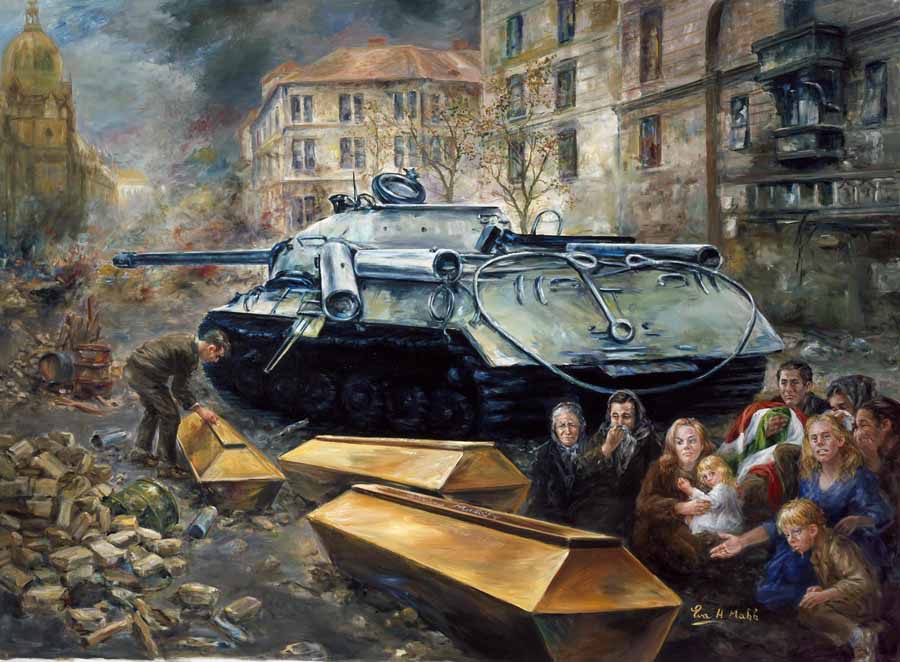
  • Depicts a disabled tank, shattered and burning apartments, and an unknown man, at left, writing on a coffin. Another man clutches to his heart a tattered Hungarian flag. This painting is part of the Hungarian millecentennial historical suite in the Museum of Hungarian Military History in Budapest.

    September 19, 2025

    Depicts a disabled Soviet tank, shattered and burning apartments on Circle Avenue - the great ring road through the center of Pest, once one of its most beautiful streets
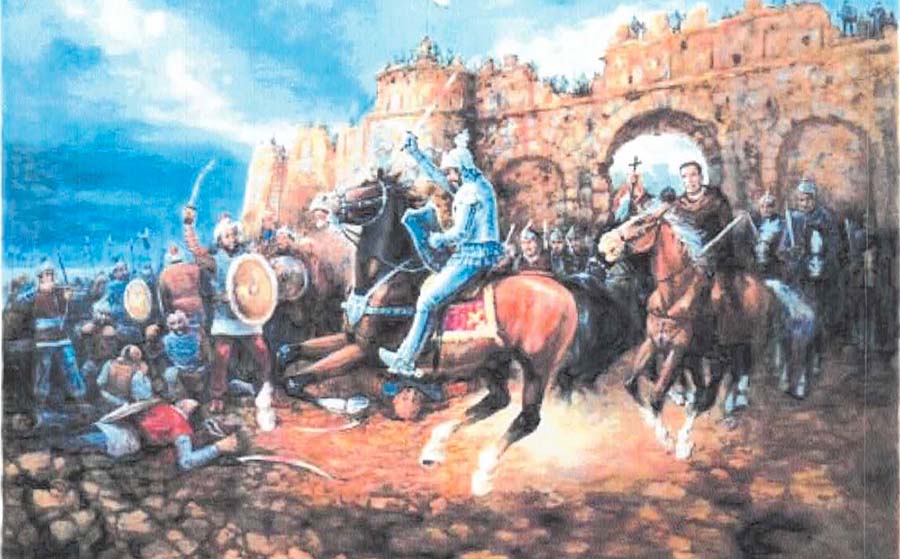
  • The Battle for Nandorfehervar by Americo Makk

    September 19, 2025

    The city, named for its white castle is today's Belgrade, in Serbia, but in 1456 it was the seat of government for Hungary and the southern reaches of the Danube. Turkey's Sultan Mohamed Julius IV besieged the city with an army of 150,000 soldiers.
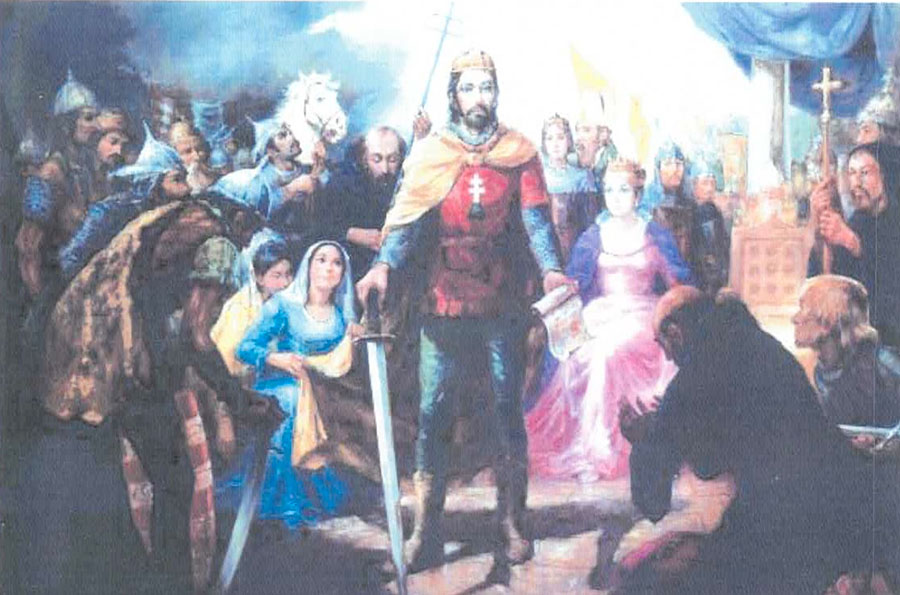
  • St. Stephen King of Hungary by Americo Makk

    September 19, 2025

    As King from 997-1038, Stephen (who was canonized 83 years after his death) Christianized Hungary and gained recognition of its independence from Pope Sylvester II in the form of a crown and title, "King by the Grace of God."
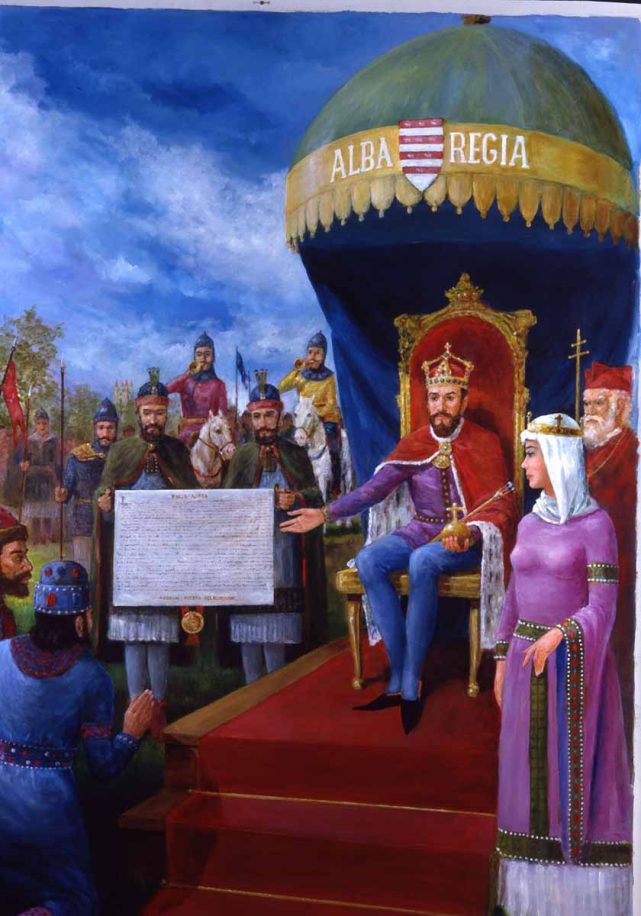
  • Andrew II, 1205-1235, was politically corrupt and economically inept. His alienation of Hungarian nobility led to rebellion in 1213. The Servientes, the professional court soldiers, compelled him to sign Hungary's equivalent of the Magna Carta, the Golden Bull, in 1222, guaranteeing their personal rights and the right of rebellion against the king and eliminating taxation of the nobility. Painting is detail of the full image. This painting is part of the Hungarian millecentennial historical suite in the Museum of Hungarian Military History in Budapest.

    September 19, 2025

    Andrew II, 1205-1235, was politically corrupt and economically inept. His alienation of Hungarian nobility led to rebellion in 1213.
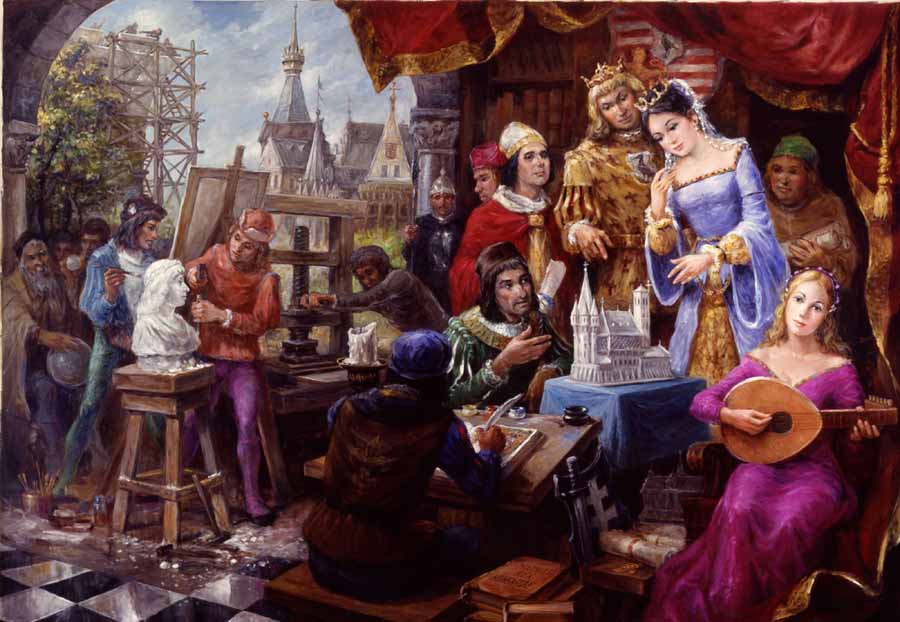
  • Mathias (1458-1490) was literally a Renaissance man: a soldier and humanist and patron of the arts, sciences, and church, he sponsored the famed Buda Picture Chronicle and united Central Europe politically and economically. The painting depicts him showing Beatrix, his Italian queen whose name means "beauty," a model of their new palace, while around them work scientists, painters, sculptors, and architects, printers, codex writers, and musicians. This painting is part of the Hungarian millecentennial historical suite in the Museum of Hungarian Military History in Budapest.

    September 19, 2025

    Mathias (1458-1490) was literally a Renaissance man: a soldier and humanist and patron of the arts, sciences, and church, he sponsored the famed Buda Picture Chronicle and united Central Europe politically and economically.
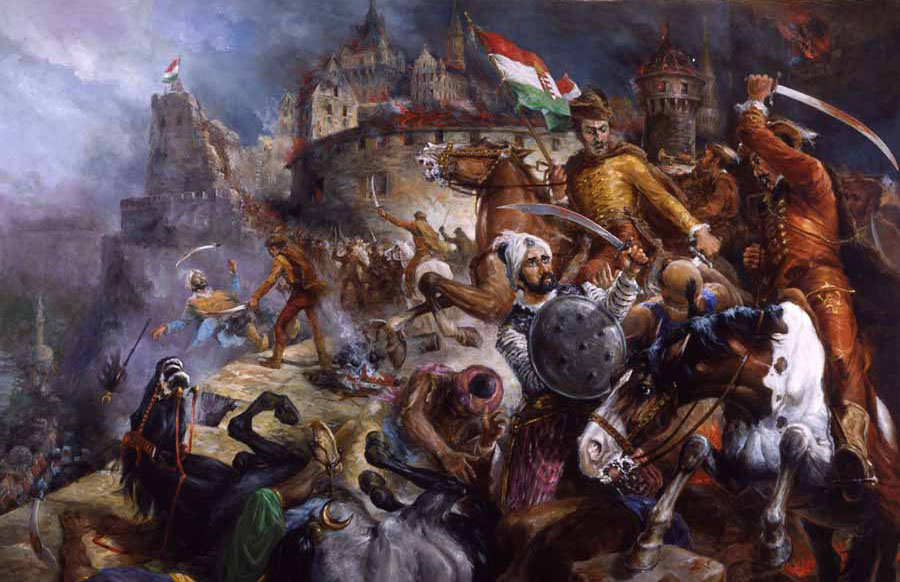
  • In 1526 Suleiman the Magnificent lead an army of 300,000 Turks on a quest ot conquer the world. He failed. For 160 years, the Hungarian nation protected Western Europe from the Ottoman Empire, and in 1686, in a decisive battle for the liberation of Buda, ended Turkish rule.

    September 18, 2025

    In 1526 Suleiman the Magnificent lead an army of 300,000 Turks on a quest ot conquer the world. He failed.
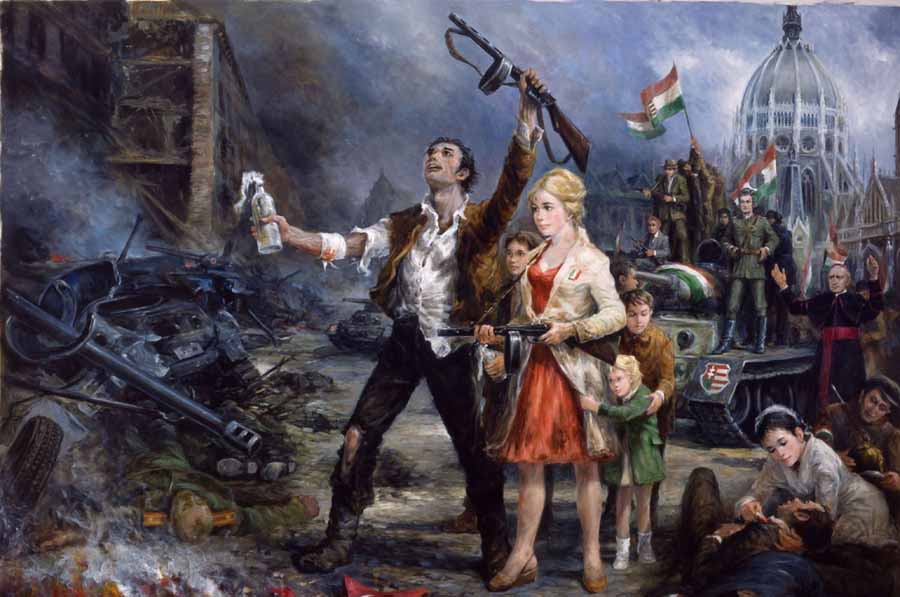
  • In 2006, when this painting was installed ni the Museum of Hungarian Military History with the other early works of the Millecentennial Suite, Hungarians celebrated the history of their heroic uprising against a brutal, Communist regime.
    September 18, 2025

    In 2006, when this painting was installed ni the Museum of Hungarian Military History with the other early works of the Millecentennial Suite, Hungarians celebrated the history of their heroic uprising against a brutal, Communist regime.

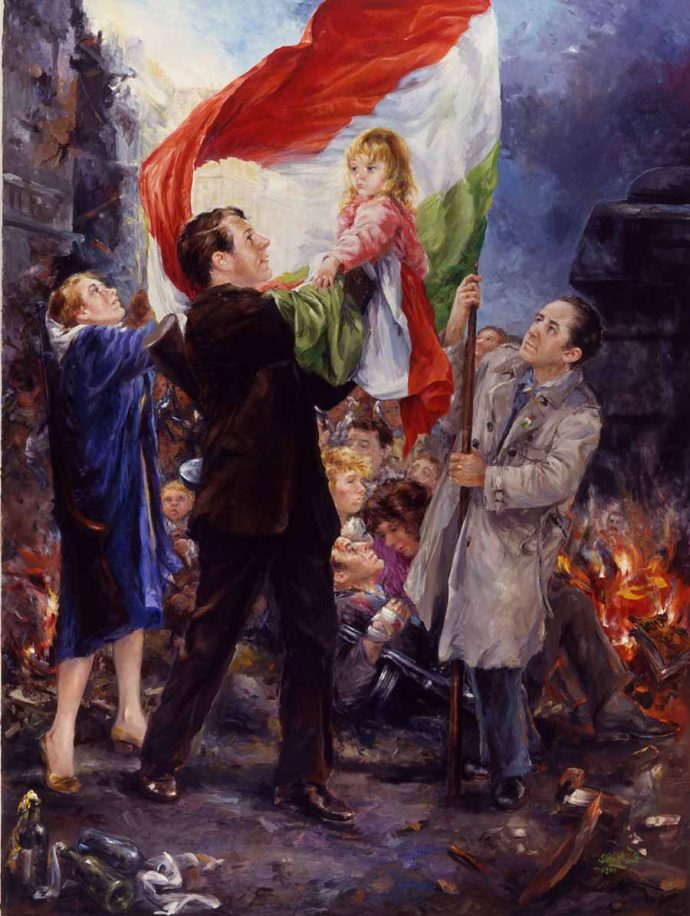
  • With the flag as its pinnacle, Eva Makk has celebrated her nation and her family. Light floods through the center of the Hungarian flag from which the Soviet emblem has been cut-sheltering the wounded and illuminating the child, Eva's grand daughter, Alexandra, held up by her son, a symbol of Hungary's future. At left, holding the flag, is her husband and partner, Americo. Beyond him, flames consume the oppressors. This painting is part of the Hungarian millecentennial historical suite in the Museum of Hungarian Military History in Budapest.

    September 18, 2025

    With the flag as its pinnacle, Eva Makk has celebrated her nation and her family.
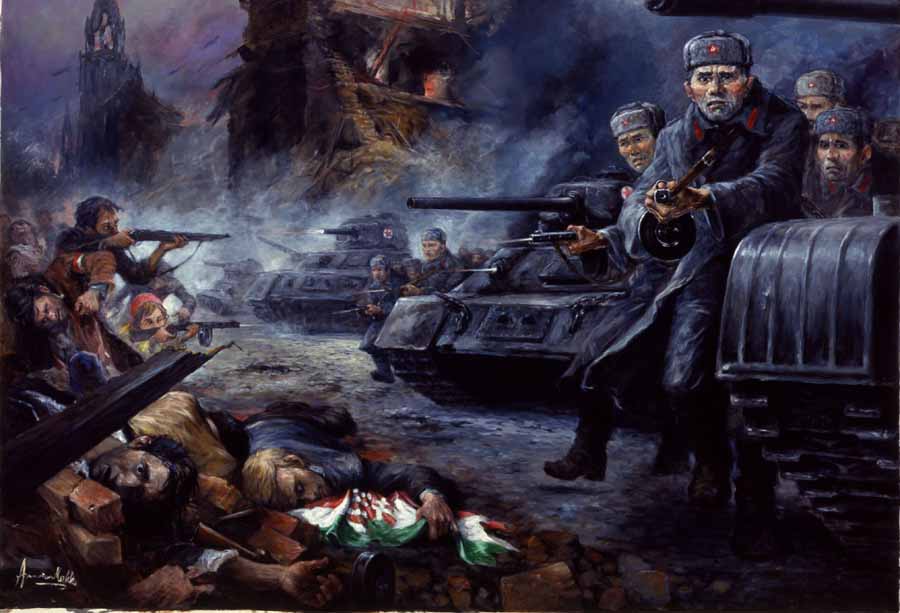
  • After its victorious Freedom Fight, Hungary was an independent, free, and neutral nation for 13 days, from October 23 until November 4, 1956, when the Soviet Union attacked it with full military force. The "Free World" did not support Hungary's efforts to become free, and the Soviets, in retaliation for the revolution, launched a full-scale invasion against the nation and its people. The streets of the capital became slippery with Hungarian blood as the nation's freedom, and its people, were murdered. This painting is part of the Hungarian millecentennial historical suite in the Museum of Hungarian Military History in Budapest.

    September 18, 2025

    After its victorious Freedom Fight, Hungary was an independent, free, and neutral nation for 13 days, from October 23 until November 4, 1956.